Setting Boundaries Without Guilt
Setting Boundaries Without Guilt

Setting Boundaries Without Guilt
Setting a boundary and feeling guilty about it tend to happen together. That guilt can feel like proof you're being unreasonable or unkind — but it's usually just proof you're doing something unfamiliar.
Why the Guilt Shows Up Anyway
If you grew up keeping the peace, anticipating others' needs, or avoiding disappointment, boundaries can feel like breaking a role you learned to play. The guilt isn't a sign you've done something wrong. It's often just a nervous system reacting to a change in a familiar pattern.
A Boundary Isn't a Punishment
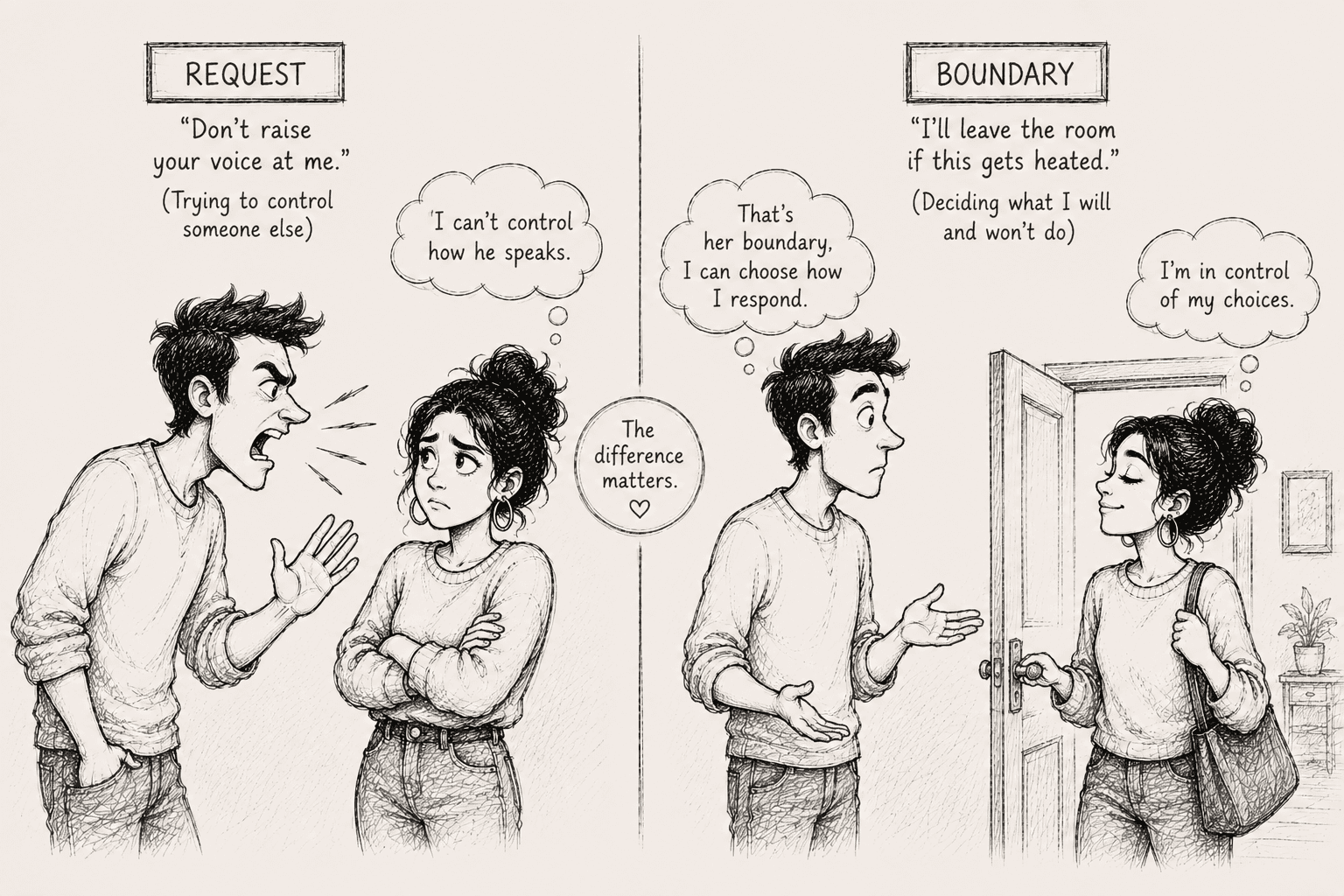
A boundary isn't about controlling what someone else does — it's about deciding what you will and won't do in response. "Don't raise your voice at me" is a request. "I'll leave the room if this gets heated" is a boundary. The difference matters: a boundary is something you're actually in control of.
Start Small
Boundaries don't have to be dramatic to count. A simple one can sound like:
"I can't take this on right now."
"I need to step away and come back to this later."
"That doesn't work for me."
No lengthy justification required. Practicing on lower-stakes moments builds the same muscle needed for harder conversations later.
The Guilt Might Not Fully Disappear
That's usually okay. The goal isn't to feel zero guilt before setting a boundary — it's to stop letting the guilt make the decision for you.
This article offers general guidance and isn't a substitute for individualized therapy support.
Setting Boundaries Without Guilt
Setting a boundary and feeling guilty about it tend to happen together. That guilt can feel like proof you're being unreasonable or unkind — but it's usually just proof you're doing something unfamiliar.
Why the Guilt Shows Up Anyway
If you grew up keeping the peace, anticipating others' needs, or avoiding disappointment, boundaries can feel like breaking a role you learned to play. The guilt isn't a sign you've done something wrong. It's often just a nervous system reacting to a change in a familiar pattern.
A Boundary Isn't a Punishment
A boundary isn't about controlling what someone else does — it's about deciding what you will and won't do in response. "Don't raise your voice at me" is a request. "I'll leave the room if this gets heated" is a boundary. The difference matters: a boundary is something you're actually in control of.
Start Small
Boundaries don't have to be dramatic to count. A simple one can sound like:
"I can't take this on right now."
"I need to step away and come back to this later."
"That doesn't work for me."
No lengthy justification required. Practicing on lower-stakes moments builds the same muscle needed for harder conversations later.
The Guilt Might Not Fully Disappear
That's usually okay. The goal isn't to feel zero guilt before setting a boundary — it's to stop letting the guilt make the decision for you.
This article offers general guidance and isn't a substitute for individualized therapy support.
Blog

What To Expect in Your First Therapy Session
What To Expect in Your First Therapy Session

How Therapy Can Help Resolve Trauma
How Therapy Can Help Resolve Trauma
Setting Boundaries Without Guilt
Setting Boundaries Without Guilt

Why Rest Feels Unproductive?
Why Rest Feels Unproductive?

How to Stop Overthinking Everything
How to Stop Overthinking Everything

Website by: Shivangi Agarwal
Website by: Shivangi Agarwal